
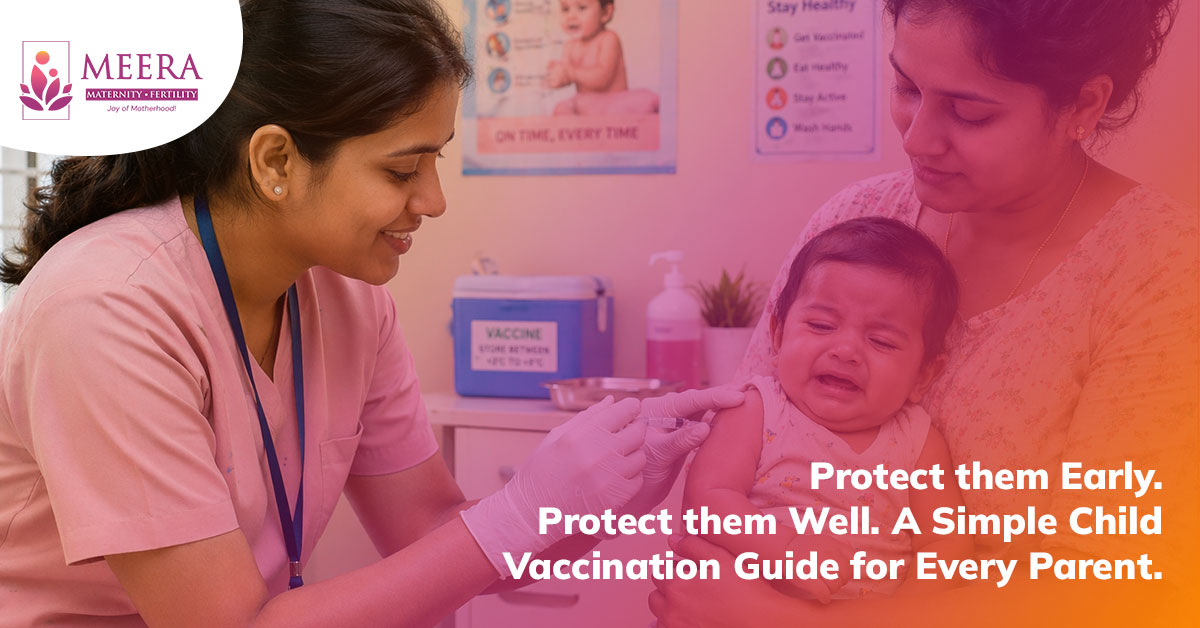
The early days of parenting can feel like standing in the middle of a busy road, with advice coming from every direction. Everyone has an opinion. Every choice feels big. And somewhere in all that noise, you’re just trying to do what’s right for your child.
Here’s one place where the path is clear.
Vaccination is one of the few decisions that doctors across the world agree on completely. But it is not just routine; it is effective. It protects. It saves lives.
You can’t shield your child from every illness or risk out there. But you can protect them from many serious diseases. That’s exactly what vaccines are designed to do. Quietly, safely, and over time.
In this guide, we’ll walk through what vaccines actually do, why timing matters, what to expect after a shot, and how to make the whole process easier for you and your child.
Before we get into what vaccinations involve, let’s first understand what they actually do inside your child’s body — in the simplest way possible.
What Vaccines Really Do Inside Your Child’s Body
Let’s make this simple.
Think of your child’s body as having its own small team that fights germs every day. This team works hard to keep your child healthy. But when a strong or new germ enters for the first time, the body may not be ready to fight it well. That’s when children can fall very sick.
A vaccine helps by preparing this team in advance.
It shows the body a very safe and weak version of the germ. This does not make your child sick. Instead, it teaches the body how to fight. So if the real germ ever enters later, the body already knows what to do and can stop it quickly.
This protection can last for many years. For some illnesses, it can even last a lifetime.
Now that you understand what vaccines do, here’s why starting early and staying on track makes all the difference.
Why Following the Right Time for Vaccines Matters
Vaccines are not given at random times. There is a reason behind when each one is given.
In the early months, your baby’s body is still growing and learning how to fight infections. Some vaccines work best when given during these early stages. They protect your child at the time when they need it the most.
If a vaccine is delayed or missed, it can leave a gap in protection. During that time, your child may be more open to serious illness.
You can think of it like building a wall. Each step adds strength. But if one part is missed or delayed, the wall is not as strong as it should be.
The schedule followed in India is carefully planned for children here. It takes into account common illnesses and the needs of growing babies.
India actually has two vaccination programs that work together, and as a parent, it helps to know the difference.
Two Vaccination Programs Every Indian Parent Should Know
In India, there are two main vaccination programs that guide your child’s care. Knowing about them can help you feel more confident and informed.
The first is the government’s free vaccination program. These vaccines are available at government hospitals and health centres across the country. They cover the most important diseases and are given at no cost.
The second is the schedule suggested by the Indian Academy of Pediatrics. This schedule includes some additional vaccines that are usually given at private clinics. These are also safe and widely used.
Both programs are carefully planned and updated based on medical research. They are not in conflict with each other. In fact, they work together.
Your pediatrician will look at both and guide you based on what your child needs. The answer will depend on your child’s age, health, and your location.
One of the most common worries parents have after a vaccine visit is, “Is this reaction normal?” Here’s what to expect.
What Reactions Are Normal After Vaccination?
It’s natural to feel a little worried after your child gets a vaccine. Many parents wonder if what they’re seeing is normal.
In most cases, small changes after a vaccine are completely normal. In fact, they are a sign that your child’s body is doing its job and building protection.
You may notice a mild fever that comes and goes within a day or two. There can be slight redness or swelling where the injection was given. Some babies may be more fussy than usual or want to be held more. A few may eat a little less for a short time.
These changes usually settle on their own.
You can help your baby feel better by keeping them comfortable, offering extra feeds, and giving many cuddles. If needed, you can place a cool cloth on the injection area. Give any medicine only if your doctor has advised it.
There are a few signs where you should call your doctor right away. These include a high fever that does not come down, continuous crying for several hours, or any trouble with breathing.
Usually, there is no need to worry. These reactions pass quickly, and your baby comes out stronger.
What if you’ve missed a vaccine or fallen behind on the schedule? This scenario is more common than you think, and it’s never too late.
Missed a Vaccine? Here’s What You Can Do
If you’ve missed a vaccine, take a deep breath. It happens more often than you think.
Life with a baby or a young child can be unpredictable. There may be days when your child is unwell, or you have travel plans, or things just don’t go as planned. Missing a vaccine does not make you a bad parent.
The good news is you don’t have to start all over again.
In most cases, your child can continue from where they left off. A pediatrician can guide you with a simple catch-up plan based on your child’s current age and health.
The most important step is just getting back on track.
It’s not about being perfect. It’s about doing what you can, when you can. And you’re doing that now.
Make sure to carry your child’s vaccination card to your next visit so your doctor can guide you properly.
Beyond the clinic visits, there are small everyday things you can do to make vaccine day easier for both you and your child.
Making Vaccine Day Easier for You and Your Baby
Vaccine day can feel a little stressful for both you and your baby. But a few small steps can make it much easier.
For your baby, comfort makes a big difference. You can feed them just before or even during the shot if possible. Holding them close, making eye contact, and speaking softly can help them feel safe. Bringing a favourite toy or cloth can also calm them. Right after the shot, a quick cuddle goes a long way.
For you, a little planning helps. Write down any questions you have before the visit so you don’t forget. Always carry your child’s vaccination card. After the visit, take a moment to note down what was given and when the next visit is due.
And one gentle tip: try not to search for vaccine side effects late at night. It often brings more worry than clarity.
Vaccine day may be tough for a few moments, but the protection it gives stays for years.
And if stepping out on vaccine day feels difficult, especially with a very young baby, there are ways to make it even more comfortable for you.
Gentle Vaccination Care at Home in Kumbakonam
For many parents, stepping out with a newborn is not always easy. A mother may still be recovering. A very young baby may need extra care. Even a simple clinic visit can feel like a big task in those early days.
This is where home vaccination can help.
With Meera Maternity’s home vaccination service, a trained healthcare team comes to your home and gives the vaccine in a safe and calm setting. They also guide you on what to expect after the vaccine and how to care for your baby.
The service is available across Kumbakonam and nearby areas, making it easier for families to stay on track without added stress.
You don’t have to step out for your baby’s early vaccines. Care can come to you with the same attention and safety you would expect at a clinic.
Still have a few questions in mind? Let’s go through some of the most common ones parents ask.