
The Moment of Panic
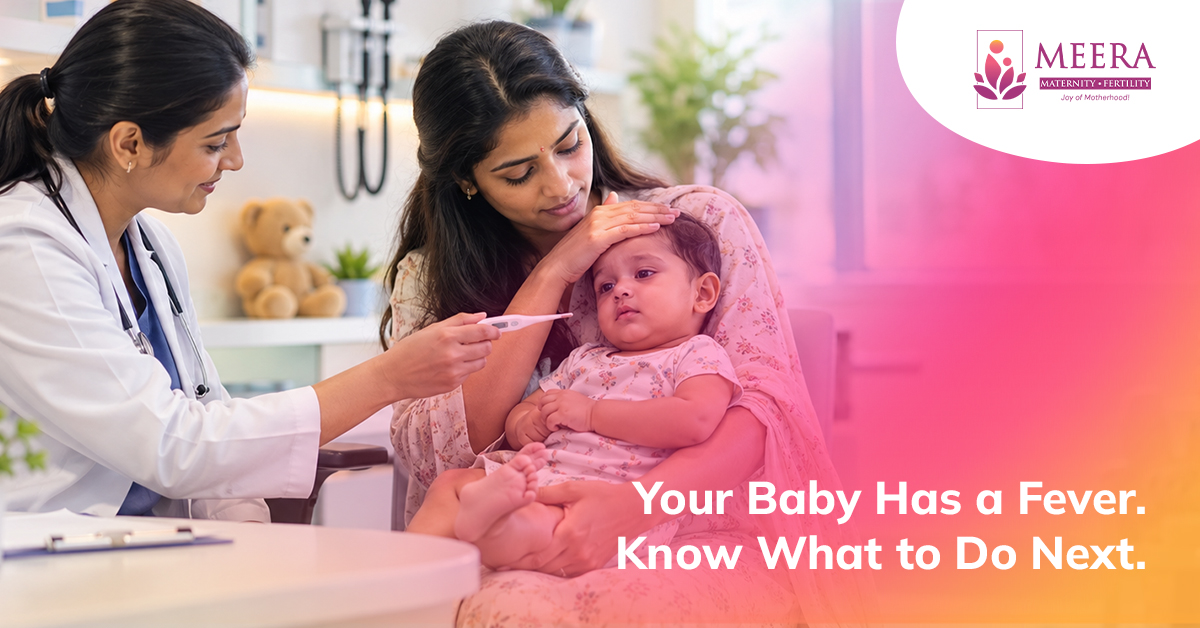
It is 11 PM. Your 6-week-old baby feels warm when you touch their forehead. Grandma says, “Wait till morning. Babies usually feel warm.” But something inside you says you should not ignore it.
So, what should you do?
For a baby under 3 months, fever needs to be taken more seriously than it is in an older child or adult. Even a small rise in temperature can sometimes be the first sign of an infection that needs quick medical care.
This guide explains what to do if your newborn has a fever, what not to do at home, which warning signs to watch for, and what you can expect when you reach the hospital. Most importantly, it will help you know what to do in the next 30 minutes instead of waiting and wondering.
Why Fever Under 3 Months Is Different
A newborn’s body is still developing. Their immune system is not yet as strong or ready to fight infections as an older child’s immune system. Because of this, an infection may not always cause many clear signs.
Sometimes, fever may be the only sign that something is wrong.
In some babies, a fever can be linked to an infection such as a urinary infection or a serious infection in the blood. This is why doctors do not treat fever in a newborn the same way they treat fever in a toddler or older child.
A rectal temperature of 100.4°F (38°C) or higher in a baby under 3 months is considered an emergency and needs medical evaluation without delay.
This is important even if your baby looks comfortable, is feeding normally, or is not crying much.
For older children, doctors may sometimes suggest watching the child at home for a while. But for a baby this young, waiting to see whether the fever goes away is not the right approach.
So, if your newborn reaches 100.4°F (38°C) or higher, do not wait until morning or wait for more symptoms to appear. Contact your paediatrician or take your baby to a hospital for evaluation.
What to Do Right Now
When your baby feels hot, it is easy to panic. Try to stay calm and take these steps one by one.
1. Check the temperature accurately.
Use a reliable thermometer to check your baby’s temperature. For babies of this age, a rectal temperature is considered the most reliable way to measure body temperature.
If the temperature is 100.4°F (38°C) or higher, treat it as an urgent concern.
2. Do not wait for the fever to come down.
Do not wait for a few hours to see whether the temperature drops on its own. Call your paediatrician or go to the hospital immediately if your baby has a temperature of 100.4°F (38°C) or higher.
3. Do not give medicine on your own.
Do not give paracetamol or any other fever medicine unless a doctor has advised you to do so and has given you the correct dose for your baby.
Newborns need special care, and the right medicine and dose depend on the baby’s age, weight, and condition.
4. Take note of other changes.
Tell the doctor whether your baby is feeding normally, waking normally, crying differently, breathing comfortably, or showing any other unusual signs.
These details can help the doctor understand what is happening.
5. Keep your baby lightly dressed.
Do not wrap your baby in several layers of clothing or blankets. Keep them comfortably dressed while you arrange medical care.
The key point is simple: a fever in a baby under 3 months should not be managed as a routine fever at home.
What to Avoid: Common Mistakes and Myths
When a baby has a fever, family members may suggest home remedies that they have used for years. The intention is usually to help. However, some common methods can make the situation worse or delay the medical care your baby needs.
Do not give fever medicine without medical advice.
Avoid giving paracetamol or another medicine without speaking to a doctor first. Do not guess the dose based on what was given to an older child.
Do not use alcohol rubs.
Alcohol should never be used to cool a baby’s body. It can be harmful and is not a safe way to manage fever.
Avoid ice baths.
Putting a baby in very cold water can cause shivering and make them uncomfortable. It does not treat the reason behind the fever.
Can you use a wet cloth on the forehead?
A soft cloth with lukewarm, not cold, water may be used as a comfort measure while you arrange medical care. However, it should never replace a medical check.
If your baby is under 3 months and has a temperature of 100.4°F (38°C) or higher, a wet cloth is not a reason to stay home and wait.
Do not over-wrap your baby.
Some families believe that a baby should be covered heavily so they can “sweat out” the fever. Avoid this. Too many clothes or blankets can make your baby’s temperature rise further.
Do not wait for more symptoms.
You do not need to wait for coughing, vomiting, poor feeding, or other signs before seeking help. In a very young baby, fever alone is enough reason for urgent medical evaluation.
Warning Signs That Mean “Go Immediately”
A fever in a baby under 3 months already needs medical attention. Certain symptoms make the situation even more urgent.
Watch for signs such as:
- Your baby is feeding poorly or refusing feeds.
- Your baby is unusually sleepy, difficult to wake, or feels floppy.
- Your baby is crying constantly or has an unusual, high-pitched cry.
- Your baby is breathing very fast or seems to be working hard to breathe.
- You notice grunting while your baby breathes.
- The lips or skin look bluish.
- Your baby develops a rash, especially one that does not fade when gentle pressure is applied.
- The soft spot on the baby’s head looks unusually bulging or sunken.
- Your baby has a seizure or fits.
If you notice any of these signs, do not wait to see whether the baby improves at home. Seek emergency medical care.
Is it okay to let a baby sleep with a fever?
A baby may sleep when they are unwell, but sleep should not make you ignore a fever or other warning signs. Keep the baby lightly dressed and check on them regularly.
Most importantly, if your baby is under 3 months and has a temperature of 100.4°F (38°C) or higher, do not delay medical evaluation simply because the baby is sleeping.
What Happens at the Hospital?
For many parents, the fear of the unknown can make an already stressful situation feel even worse. You may wonder, “Will my baby need many tests?” or “What will the doctor do?”
A paediatrician will first examine your baby and ask questions about the fever, feeding, activity, breathing, and other symptoms.
Depending on your baby’s age, temperature, examination, and overall condition, the doctor may recommend blood or urine tests. In some cases, the baby may need to stay under observation for some time.
This careful approach does not automatically mean that your baby has a serious illness. Young babies are checked thoroughly because doctors do not want to miss an infection that may not show many signs at first.
The goal is to find the cause quickly and decide what care your baby needs.
Knowing this beforehand can help you feel less worried when the doctor recommends an examination or tests. These steps are part of making sure your newborn is safe.
Care That’s Close and Ready
When a newborn develops a fever, knowing where to go can save valuable time. Meera Maternity & Fertility Clinic offers paediatric and NICU-linked care for urgent newborns concerns, giving families in and around Kumbakonam a nearby option when they need medical attention.
You do not have to wait for an emergency to decide where to seek help. Save the clinic’s contact number now so you know whom to call if your baby needs urgent care.
Disclaimer
This article is for general educational purposes and does not replace professional medical advice. Any fever in a baby under 3 months should be evaluated by a qualified paediatrician without delay. In an emergency, contact your doctor or nearest hospital immediately.