
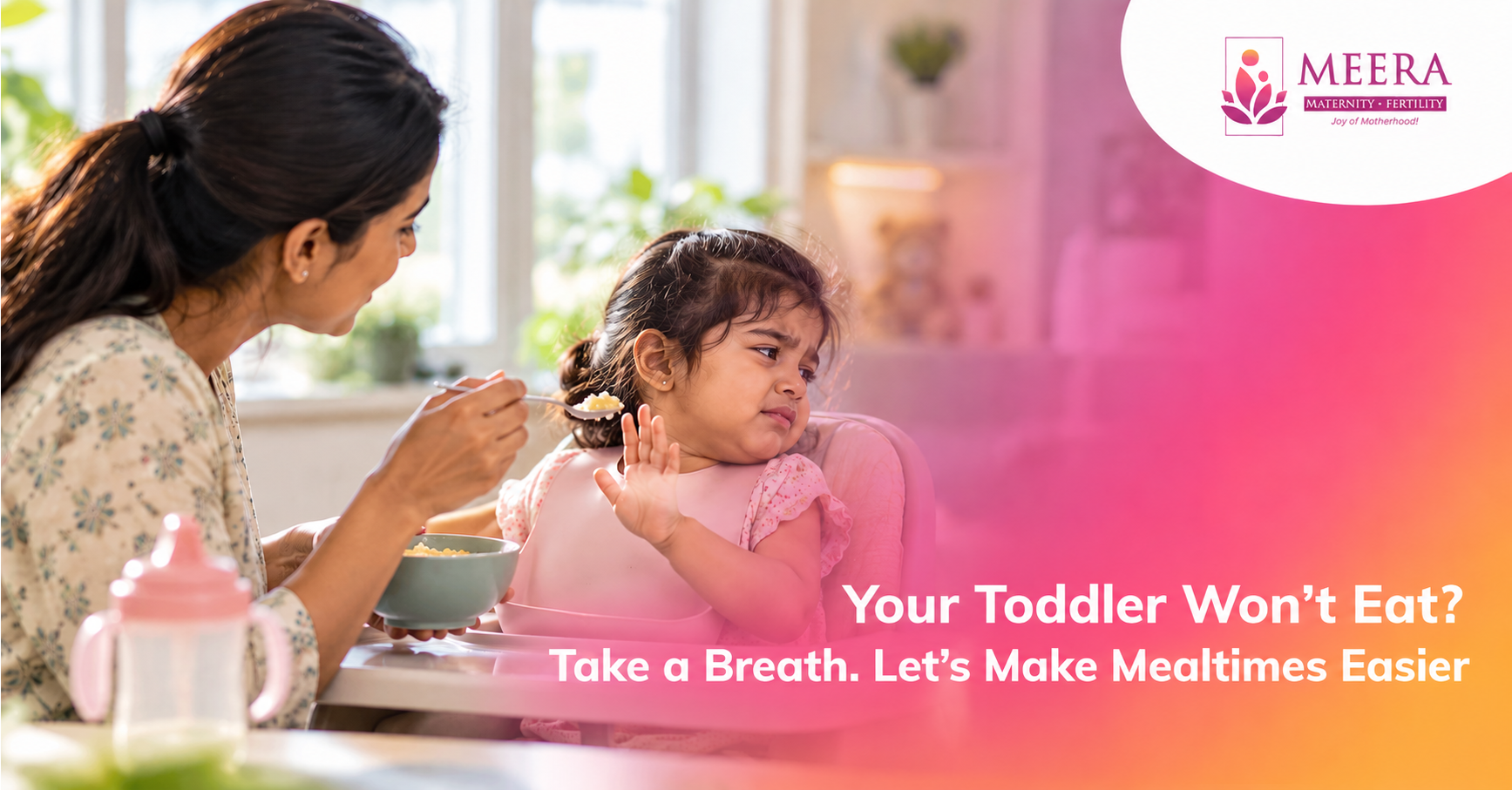
Is Your Toddler Refusing Food? Here’s What You Need to Know
It is 2 a.m. Your little one has eaten just two bites of dinner, pushed the plate away, and said, “Amma, venam!” You may have tried singing, showing cartoons, or following your child around with a spoon. Once the house is quiet, one worry keeps coming back: Is my child eating enough?
Take a deep breath, Amma. You are not alone.
Fussy eating is common in children aged 1–3 because their growth slows and they begin to want more control over what they eat. Many toddlers eat different amounts from day to day and still get enough food over a week. However, poor weight gain, refusing whole food groups, or unusual tiredness may need a doctor’s check.
In this guide, we will explain why toddlers refuse food, which signs to watch for, simple ways to make mealtimes easier, and healthy food ideas using everyday Tamil Nadu dishes.
Let’s start with why your little one is doing this.
Why Do Toddlers Refuse Food?
Your child may have eaten well as a baby but now refuses even favourite foods. This can be worrying, but there are several reasons for this change.
1. Your child is growing more slowly
During the first year, babies grow quickly and need plenty of food. After their first birthday, growth usually slows down. As a result, your toddler may not feel hungry at every meal. Eating well one day and eating less the next can be normal.
2. Your child wants to do things alone
Toddlers are learning to make choices. Saying “no” is one way they show that they want to decide for themselves. They may also refuse foods because of their colour, smell, taste, or feel.
3. Too many snacks or drinks
Milk, tea, filter coffee, biscuits, packaged snacks, and health-drink powders can fill a small tummy before mealtime. Constant snacking can also make your child less hungry when proper food is served.
4. Breastfeeding before meals
Breastfeeding can continue until 2 years or beyond. However, if your child feeds just before a meal, they may not feel hungry enough to eat. When possible, offer the main meal first and breastfeed afterwards.
5. Pressure and distractions
Phones, television, chasing your child with a plate, or forcing a few more bites can make mealtimes stressful. A tired child or an irregular meal routine may also refuse food.
So, how do you know if this is just a phase or something more?
Normal Fussy Eating vs Signs to Watch For
Some food refusal is a normal part of growing up. However, certain signs should not be ignored.
| Usually normal | When to see a doctor |
| Eats well one day and less the next. | Weight gain slows or stops, or weight drops on the growth chart. |
| Likes some foods and dislikes others | Refuses whole food groups for weeks or eats only a few foods |
| Active, playful, and alert | Often tired, pale, unusually irritable, or frequently ill |
| Plays with or spits out new foods | Gags, chokes, coughs, vomits, or struggles to swallow while eating |
| Takes time to finish meals | Ongoing constipation or diarrhoea, or eating mud or chalk |
| Refuses one food but accepts others | Loses the ability to eat foods or do feeding tasks they managed before |
A simple tip for parents: Do not judge your child’s health by one meal or one day of eating. Ask your child’s doctor to check their weight and height on a growth chart. You can also keep track of these measurements using your child’s MCP card or Poshan Tracker.
Low iron levels can also affect children’s health and may be linked to poor appetite. If your child looks pale, seems unusually tired, or eats very little over time, ask a doctor whether a check for low iron is needed.
If none of these warning signs are present, you can focus on making mealtimes calmer and helping your child build healthy eating habits.
What Works at a Tamil Nadu Table?
You do not need costly foods or a separate menu for your toddler. Small changes to your daily routine can make a difference.
1. Follow a simple meal routine
Offer three main meals and two planned snacks each day. Give water between meals. Try to keep meal and snack times regular so your child has time to feel hungry.
2. Keep meals short and calm
Allow about 20–30 minutes for a meal. If your child has finished or refuses to eat, end the meal calmly. Avoid chasing them around the house with a plate.
3. Let your child decide how much to eat
You decide what food to offer and when to serve it. Your child decides how much to eat. Start with small portions and offer more if they want it. Never force them to finish everything on the plate.
4. Keep offering new foods
Your child may need to see or try a food many times before accepting it. Offer small amounts of the same food again on another day. Let your child touch, smell, or taste it without pressure.
5. Eat together as a family
Toddlers often learn by watching adults. Sit together and enjoy the same family food, making sure it is cut or mashed to suit your child’s age and eating skills.
6. Make mealtimes screen-free
Keep phones and television away during meals. Praise your child for trying a food, but avoid using sweets or treats as a reward for eating.
7. Let your little one help
Give simple tasks such as washing keerai, choosing between two vegetables, or helping you prepare idli batter with supervision. Taking part in food preparation can help children feel more comfortable around food.
8. Handle family pressure gently
If grandparents or other family members say, “Ootividu, innum konjam saapida sollu” (feed the child a little more), explain that you are trying to help your toddler learn to eat without fear. Invite them to sit and eat with the child instead of forcing extra bites.
Now, what can you actually put on your toddler’s plate?
Simple Tamil Nadu Food Ideas for Fussy Eaters
Everyday home-cooked food can provide a good mix of nutrients. The aim is to offer different foods over the day, rather than making your child eat a large amount at one sitting.
| What your child needs | Tamil Nadu-friendly food ideas |
| Iron-rich foods | Ragi koozh, ragi dosa, keerai masiyal, dal rice, egg, and boneless fish or chicken |
| Protein, including vegetarian choices | Paruppu sadam, mashed sundal, pesarattu, adai, curd, paneer, and well-cooked soya |
| Energy for growth | Rice with ghee, nei dosai, ven pongal, coconut chutney, and banana |
| More vegetables | Vegetable uthappam, carrot or beetroot idli, vegetable paniyaram, and vegetable kootu mixed with rice |
| Healthier snacks | Soft fruit pieces, steamed kozhukattai, or a small homemade snack made with roasted channa powder |
Pair iron-rich plant foods with vitamin C-rich foods, such as lemon or amla, where suitable. Offer foods in textures your child can safely manage, and remove bones from fish and chicken.
A Sample Day of Food for Your Toddler
Here is one simple example you can adjust to your child’s hunger, food preferences, and family routine.
- Breakfast: Soft idli with sambar, or dosa with a suitable chutney.
- Mid-morning snack: Soft, ripe banana pieces or another suitable fruit.
- Lunch: Rice with dal, vegetable kootu, and curd if your child likes it.
- Evening snack: Steamed kozhukattai or a soft homemade snack.
- Dinner: Ven pongal, soft vegetable rice, or a small portion of the family’s usual dinner.
These are ideas, not strict serving rules. Appetite and portion size vary from child to child.
A Few Food Safety Tips
- Avoid whole nuts, whole peanuts, and whole grapes in children under 3 because they can cause choking. Cut or prepare foods safely and supervise your child while eating.
- Avoid adding extra salt or refined sugar to young children’s meals. Use jaggery sparingly; it is still a form of sugar.
- Do not rely on packaged health drinks as meal replacements.
- Avoid hiding vegetables in deep-fried snacks as your main approach. Offer vegetables openly in different forms so your child can get used to them.
- Make sure food is soft enough and cut into safe sizes for your child’s age and eating skills. Always supervise meals.
And if you have tried these steps but still feel that something is not right, it is okay to ask for help.
When Should You See a Doctor?
Book a visit with your child’s paediatrician if you notice any of the warning signs listed above. Seek medical advice if your child eats very little for a long time, loses weight, struggles to swallow, or seems unusually tired or pale. Trust your concern, too. You do not have to wait until things become serious to ask for help.
During the visit, the doctor may ask about your child’s meals, feeding habits, and health history. They may examine your child, check their weight and height on a growth chart, and suggest tests, such as a haemoglobin test, if needed.
Do not start appetite tonics, appetite medicines, iron syrup, or other supplements on your own. These should be given when advised by your child’s doctor or as part of the recommended child health programme.
Remember, many children become more comfortable with food as they grow. You are learning what works for your little one, one meal at a time. You are doing better than you think, Amma.
Need Help With Your Toddler’s Eating Habits?
If you would like a second opinion, the paediatric team at Meera Maternity Centre, Kumbakonam, can check your child’s growth and nutrition. Services such as Nutrition & Dietetics, Video Consultation, and Pediatric Lab Test at home can make it easier to get started. Reach us on WhatsApp or book an appointment whenever you are ready.
Disclaimer
This article is for general information and does not replace medical advice, diagnosis, or treatment. Every child is different. Consult a qualified paediatrician before changing your child’s diet, starting supplements, or if you notice any warning signs mentioned above.