
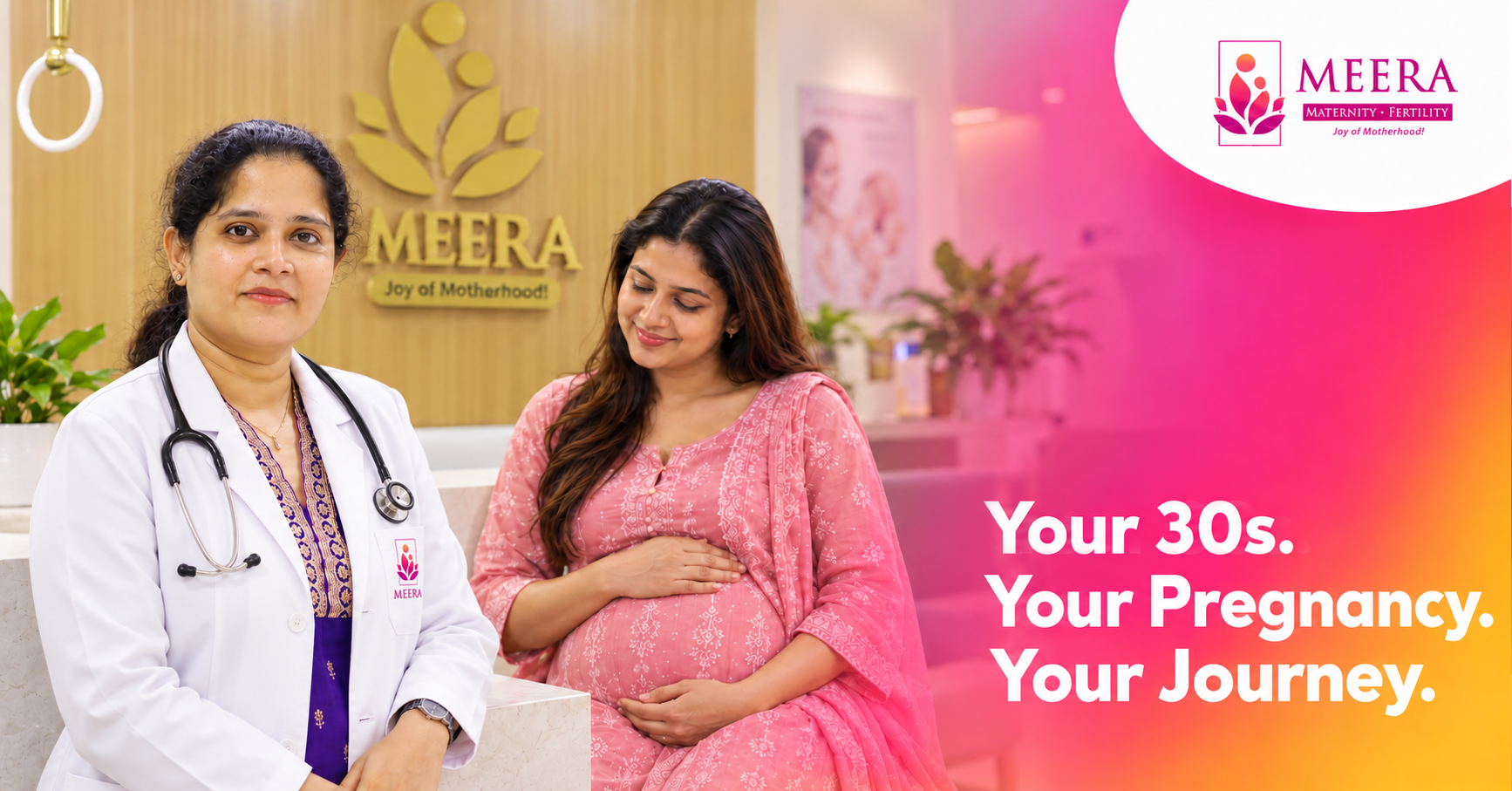
30-Something and Pregnant? You’re in Good Company
Finding out that you are pregnant in your 30s can bring a lot of feelings. You may feel happy and excited, but you may also wonder, “Am I too late?” The simple answer is no. Many healthy women have safe pregnancies in their 30s. A pregnancy after 30s may need a little more care in some areas, but regular pregnancy check-ups can help your doctor watch your health and your baby’s growth.
Doctors use the term “advanced maternal age” for women who are 35 or older. So, being 30 to 34 does not mean your pregnancy is high-risk just because of your age.
Every pregnancy is different. Your health, family history and lifestyle also matter. In this guide, we will look at fertility, preparing your body, pregnancy check-ups, possible health risks and ways to feel more ready for birth.
Let’s start with what actually changes with age.
How Age Affects Fertility and Your Timeline
One thing that changes with age is fertility, which means the ability to become pregnant. The number and quality of eggs slowly reduce as you get older. This does not happen suddenly when you turn 30 or 35.
For example, RCOG data quoted by Sitaram Bhartia Hospital says that about 75% of women aged 30 may become pregnant naturally within one year of trying. At age 35, the number is about 66%. So, getting pregnant may take a little longer for some women, but many still conceive naturally.
If you are under 35, doctors usually suggest seeking help after 12 months of trying without success. If you are 35 or older, it is better to seek help after six months. You may want to speak to a doctor earlier if your periods are not regular or if you have a known condition such as PCOS, fibroids or endometriosis.
Your partner’s age and health can also affect the chance of pregnancy.
Knowing your fertile days can help too. The fertile window is usually around 12 to 14 days before your next period. You do not need to make this complicated. Your doctor can guide you if you are unsure about your cycle.
The good news is that much of what helps is in your control.
Preparing Your Body Before and Early in Pregnancy
If you are planning a baby, a health check before pregnancy can be a useful first step. It gives you and your doctor a chance to look at your health and deal with any concerns early.
Your doctor may check your haemoglobin, thyroid, blood sugar and blood pressure. You may also discuss your vaccination history, including rubella, your Pap smear status and any medicines you take regularly.
Folic acid is also important. Common advice is 400 mcg every day, starting about three months before pregnancy and continuing through the first three months of pregnancy. Some women need a higher dose, such as those who have had a baby with a certain birth problem. Take a higher dose only when your doctor advises it.
You do not need a special or costly diet. Simple foods such as dals, greens, millets, curd, eggs and fruits can be part of a healthy diet.
Try to maintain a healthy weight, stay active for about 150 minutes a week, and aim for seven to eight hours of sleep. Avoid alcohol and tobacco, including smokeless tobacco. It is also a good idea to limit caffeine.
Most importantly, do not take medicines or herbal products on your own. Always ask your doctor first.
Once the test shows positive, here’s what the months ahead look like.
Your Pregnancy Check-up Roadmap, Month by Month
Once you know you are pregnant, book your first pregnancy visit early, ideally within the first 12 weeks. The Ministry of Health and Family Welfare recommends at least four pregnancy visits. Your doctor may suggest more visits based on your health and needs.
First 12 Weeks
During the first few weeks, your doctor may suggest:
- A scan to confirm the pregnancy and check how far along you are
- Blood group and haemoglobin tests
- Urine tests
- Infection tests when needed
- Early blood sugar testing
- A nuchal translucency scan and double marker test between 11 and 13 weeks and 6 days, when advised
Nausea and tiredness are common during this stage.
13 to 27 Weeks
This is when many women start feeling more comfortable.
You may have:
- An anomaly scan around 18 to 20 weeks
- A blood sugar test between 24 and 28 weeks
- Iron, folic acid and calcium supplements as prescribed
- The first small movements or “flutters” from your baby
28 Weeks Onwards
During the last part of pregnancy, your doctor may advise:
- Growth scans when needed
- Regular blood pressure checks
- Keeping track of your baby’s movements
- Planning for birth
- Getting ready for breastfeeding
If you live in India, you can also ask about specialist pregnancy check-ups available at government facilities under PMSMA on the 9th of every month.
Scans are meant to check your baby’s health and growth. They cannot be used to find out the baby’s sex, as telling the sex of the baby before birth is illegal in India under the PC-PNDT Act.
Some women may also be offered other tests, such as NIPT. Ask your doctor whether a test is useful for you instead of assuming that you need it.
These check-ups exist mainly to catch the few risks that rise with age early.
Health Risks to Watch and How They’re Managed
Being pregnant in your 30s does not mean that something will go wrong. Some health problems become a little more common with age, which is why regular check-ups are important.
High blood sugar: Diabetes that starts during pregnancy is checked for in every pregnancy. It can often be managed with food choices and activity. Some women may also need medicine.
High blood pressure: Your blood pressure is checked during pregnancy visits. If you have a higher chance of high blood pressure or pre-eclampsia, your doctor may suggest extra care or preventive steps.
Miscarriage and baby health problems: The chance of miscarriage and certain conditions affecting the baby’s chromosomes increases slowly with age. For example, ACOG figures put the chance of Down syndrome at about 1 in 940 at age 30 and about 1 in 353 at age 35. Screening tests and scans can help your doctor assess the chance.
There can also be a higher chance of early birth, low birth weight or twins. Your doctor will watch for these based on your individual health.
You may have heard that women over 30 will need a C-section. Age alone is not a reason for a C-section. The type of delivery depends on your health, your baby’s health and what happens during pregnancy and birth. Many women in their 30s have normal vaginal births.
Call your doctor or visit a hospital immediately if you have heavy bleeding, a severe headache, blurred vision, sudden swelling of your face or hands, reduced baby movements, leaking fluid, severe stomach pain or fever.
Pregnancy isn’t only about numbers and tests, though. How you feel matters too.
Your Mind, Your Family’s Advice, and Planning the Birth
Pregnancy can bring worry along with happiness. You may even hear someone say, “You waited too long.” Try not to let comments like this decide how you feel about your pregnancy.
If you feel worried, talk to your partner, doctor or a counsellor. You do not have to handle every fear alone.
You may also hear many pregnancy rules from family and friends. Some common ones include avoiding certain fruits, not exercising at all, or eating enough food for two people. These are not rules that apply to every pregnant woman. Ask your doctor what is right for you.
Your partner can also be part of the journey. Bring them to check-ups when possible and talk together about birth, baby care and the support you may need after delivery.
When choosing a hospital, ask about the care available during pregnancy and birth. It is also helpful to choose a hospital with NICU support in case your baby needs special care after birth.
Being in your 30s can also bring some real strengths. You may feel more settled, more prepared and clearer about what you want. Take one step at a time, follow your doctor’s advice and focus on taking care of yourself and your baby.
If you’re looking for a team that walks through all this with you…
Care Close to Home in Kumbakonam
Meera Maternity Centre supports mothers through different stages of pregnancy and after birth. Its care services include maternity care, NICU support, nutrition and diet advice, physiotherapy, breastfeeding support, psychologist support and video consultation. Home lab test services are also available. The centre has supported more than 500 births.
If you are planning a pregnancy or already expecting, you can book an appointment or WhatsApp the centre with your questions. Having the right team to guide you can make the journey feel easier.
Disclaimer
This article is for general awareness and does not replace professional medical advice, diagnosis or treatment. Every pregnancy is different. Please consult your obstetrician about your own health, tests and care plan. If you notice warning signs such as heavy bleeding, severe pain or reduced baby movements, seek medical help immediately.