
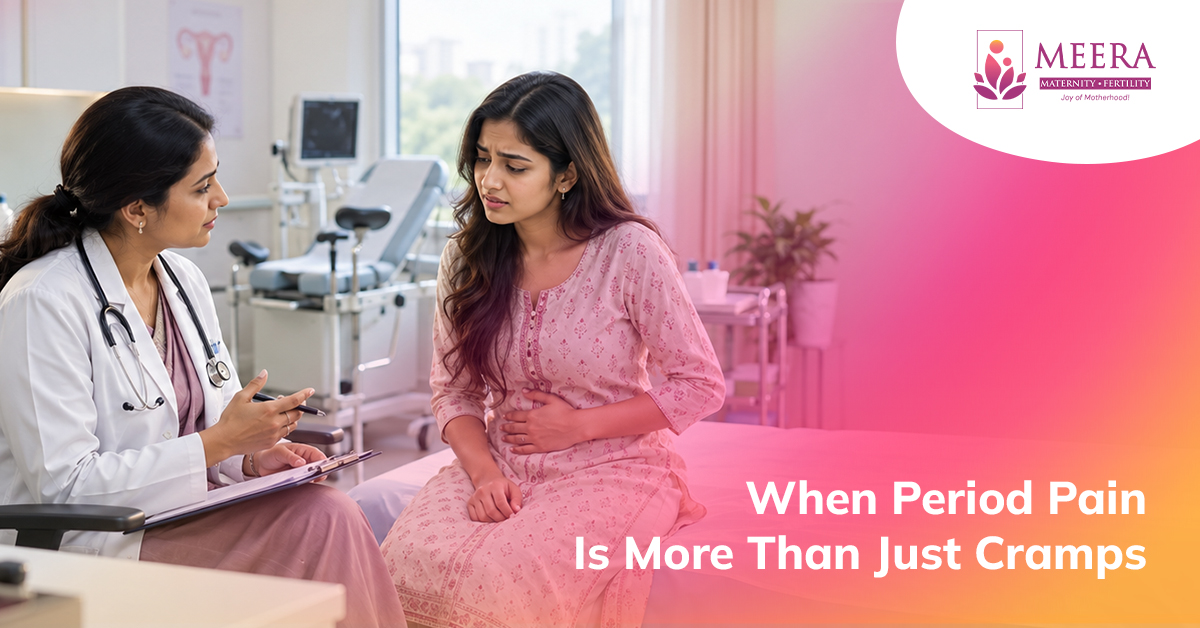
Period Pain Is Common, But Constant Pain Should Not Be Ignored
“Periods are always painful. Just take a tablet and rest.”
Many women have heard this before. Period cramps are common, and some pain around your period can be normal. But if your pain is strong enough to affect your work, sleep, relationships, or daily routine every month, it deserves attention.
You should not feel that you simply have to live with severe period pain.
One reason it is important to understand your symptoms is endometriosis. It is a condition where tissue similar to the lining of the uterus grows outside the uterus. It can cause ongoing pelvic pain and, in some women, may affect fertility over time.
So, what is the endometriosis painful periods difference? Knowing how the pain starts, how long it lasts, and whether other symptoms are present can help you understand when it may be time to speak with a gynaecologist.
Normal Period Pain vs. Endometriosis: What Is the Difference?
Normal period pain, also called primary dysmenorrhoea, usually follows a fairly predictable pattern. It often begins a day before your period or around the time bleeding starts. You may feel cramping or aching in the lower abdomen. The pain is usually manageable with rest, warmth, or common pain relief medicines and tends to improve within two or three days.
For many women, this pattern stays fairly similar from month to month.
Endometriosis-related pain can behave differently. The pain may begin several days before your period and continue during or even after the bleeding has stopped. It may be stronger than your usual cramps and may not improve much with common painkillers.
You may also notice pain during sex, painful bowel movements, or pain while passing urine, particularly during your period. Another important clue is that the pain may gradually become worse over months or years.
Some women with endometriosis also experience pain around ovulation. So, is endometriosis pain worse when ovulating? It can be. Some women experience pelvic pain in the middle of their cycle around ovulation, which is not typical of ordinary period cramps.
The pattern matters more than one painful period. If your pain is changing, becoming stronger, or affecting your everyday life, it is worth getting checked.
Other Signs That May Point to Endometriosis
Pain is not the only sign of endometriosis.
Some women may experience heavy or irregular bleeding. Others may have ongoing tiredness or digestive problems such as bloating and discomfort, particularly around their periods.
There is also an important point that many women do not know: the amount of pain does not always tell you how severe endometriosis is.
A woman with severe endometriosis may sometimes have only mild pain. Another woman may experience intense pain even when the condition appears less extensive. This means you cannot reliably judge the condition only by how much it hurts.
Some women may have very few noticeable symptoms and only discover a possible problem when they have difficulty conceiving.
This is why persistent symptoms, changes in your usual period pattern, or fertility concerns should be discussed with a gynaecologist rather than explained away as “normal period pain”.
Can Endometriosis Affect Fertility?
Endometriosis and fertility can be connected, but having endometriosis does not mean that you cannot become pregnant.
Endometriosis may affect fertility in different ways. Inflammation caused by the condition can affect the reproductive organs. Scarring or adhesions may interfere with the normal movement of the fallopian tubes. Some women develop ovarian cysts called endometriomas, which can also affect the ovaries and, in some cases, egg quality.
So, how do you know if endometriosis is affecting fertility? Difficulty becoming pregnant may be one sign, especially when it occurs along with persistent pelvic pain or other symptoms. However, fertility problems can have many causes, so proper evaluation is needed to understand what is happening.
Is it hard to get pregnant if you have endometriosis? It can be harder for some women, but pregnancy is still possible. Many women with endometriosis conceive naturally. Others may need help depending on their age, symptoms, ovarian health, fallopian tube condition, and the severity of endometriosis.
Fertility treatment may include monitoring or medicines to help with ovulation. Some women may benefit from treatments such as IUI or IVF.
The important thing is that endometriosis is not one single outcome. Early evaluation can help you understand your options and plan care based on your individual situation.
If you have ongoing symptoms, do not wait for years before asking about your fertility. Finding out what is happening earlier can give you more choices.
What Age Is Best to Get Pregnant With Endometriosis?
There is no single “best age” to become pregnant if you have endometriosis.
Fertility naturally changes with age for every woman. Endometriosis may also affect fertility, and its effects can vary from one woman to another. Because of this, women who have confirmed or suspected endometriosis may benefit from discussing their fertility plans with a gynaecologist earlier rather than putting the conversation off.
This does not mean you need to feel pressured to become pregnant immediately.
It simply means you can make decisions with better information.
If you are already trying to conceive, or you know that you would like to have children in the near future, a doctor can help you understand your situation. Depending on your symptoms and fertility health, your plan may involve trying naturally for a suitable period, monitoring your condition, or considering fertility support when needed.
The right plan is personal. An early conversation can help you make that plan with greater clarity.
When Should You See a Gynaecologist?
You do not need to wait for years before getting help for period pain.
Consider speaking with a gynaecologist if your period pain regularly affects your work, sleep, studies, relationships, or normal daily activities. You should also seek an evaluation if the pain does not improve with your usual pain relief, or if you experience pain during sex, painful bowel movements during your periods, or other unusual symptoms.
If you are trying to conceive and have not become pregnant after 12 months, a fertility evaluation is generally recommended. For women aged 35 or older, evaluation is generally advised after 6 months of trying. With known or suspected endometriosis or other fertility concerns, it may be appropriate to speak with a doctor earlier.
The evaluation may begin with your medical history and a pelvic examination. An ultrasound may be used as an initial test. In some cases, laparoscopy may be needed to confirm endometriosis.
Getting checked does not mean something is seriously wrong. It simply helps you understand what is causing your symptoms and what choices you have.
A Conversation Is the First Step
If painful periods are affecting your everyday life, you deserve more than being told to simply tolerate them.
At Meera Maternity & Fertility Clinic, the gynaecology and fertility team regularly helps women understand concerns such as persistent pelvic pain, suspected endometriosis, and difficulty conceiving.
A confidential consultation can help you understand your symptoms and decide what to do next. This may mean reassurance, further testing, or a fertility-focused plan based on your needs.
If you have been living with painful periods or fertility concerns, speak with our team and take the first step towards getting clarity.
Disclaimer
This article is for general educational purposes and does not replace professional medical advice. Endometriosis can only be diagnosed through proper clinical evaluation. If you are experiencing persistent pelvic pain or fertility concerns, please consult a qualified gynaecologist for personalised care.